
America’s hardwood exporters are urging Shanghai to see timber as a responsible choice for the environment, with furniture from ten home furnishing brands now on show in a century-old building on the Bund. That is according to John Chan, regional director for Southeast Asia and Greater China at the American Hardwood Export Council (AHEC), which opened the show last Thursday.
“A tree’s life does not end at harvest, but continues to take part in our lives in another form,” Chan said in his opening address. He said the carbon a tree absorbs as it grows stays locked inside its timber once that timber becomes furniture or building components.
It helps that America’s hardwood forests have long been run under strict laws and scientific management, Chan said, with growth consistently outpacing harvest. And with species from red and white oak to walnut, cherry, ash, and maple, he said designers rarely need “scarce or environmentally burdensome” alternatives.
The US Forest Service found the same in Pennsylvania, home to the largest hardwood resource in the United States, where net growth outpaced harvest removals by 2.1 to 1. Its inventory, published in September 2023, counted 231 million black cherry trees, more than any species but red maple.
Black cherry is also the tree Canadian-British architect Alison Brooks went to Pennsylvania to see for Forested Future, the AHEC documentary behind the Shanghai show. It comes as more than 100 architects watched her introduce its first Australian screening at Brisbane’s State Library of Queensland on the same day.
By contrast, Shanghai’s visitors get to walk through the film, with four installations inside the Brunner Mond Building taking them from a single seed to a sustainably managed forest. Between them sits furniture from the ten brands, including MoreLess and ELTO Made, in walnut, ash, white oak, and cherry.
Cherry starts the route, where floral artist Wang Zi has opened up a seed in layered slices of the timber over a floor of moss, soil, bark, and seeds. From there, white oak and ash go into TAG Studio’s scales, which balance a growing stand on one side with a harvested forest sprouting new seedlings on the other.
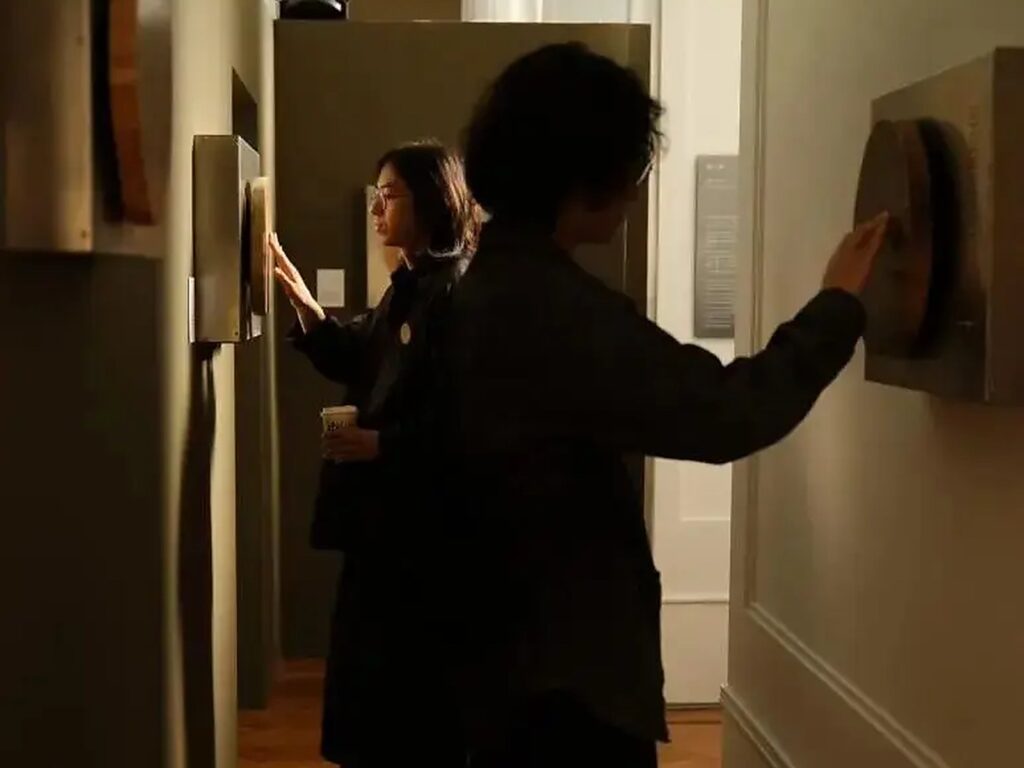
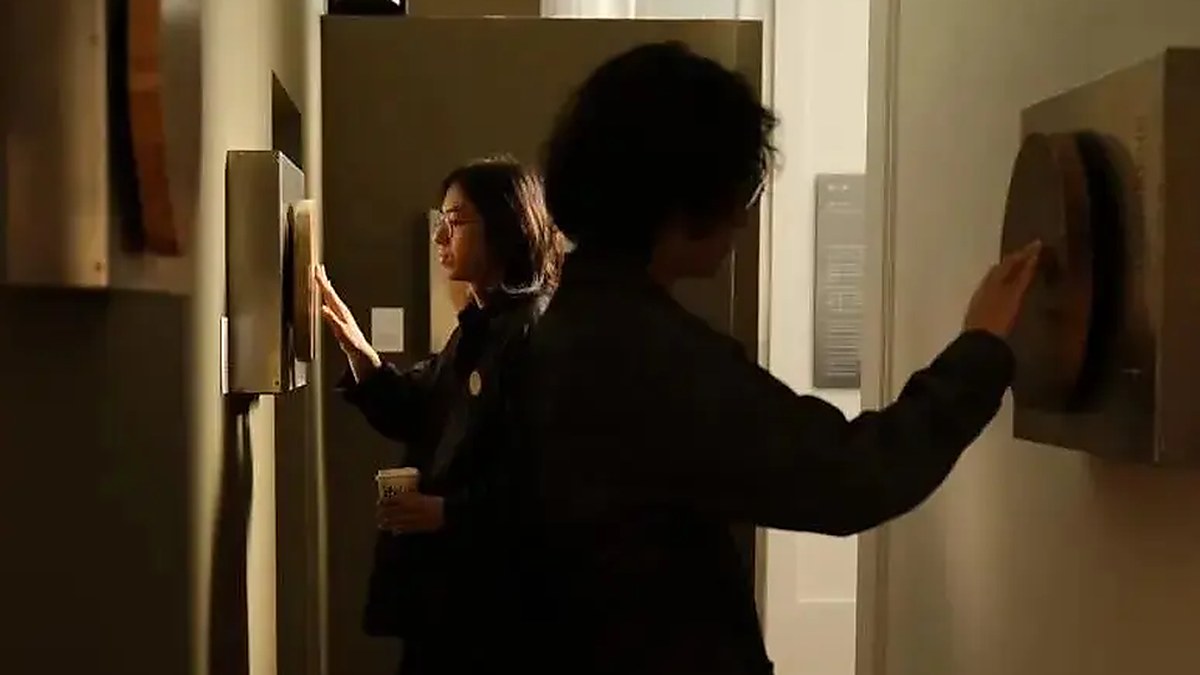
Then come the records, where visitors play five American hardwoods by turning each cross-section with the palm of a hand in place of a stylus. Sound artists iTSLab built the piece with designer Zhang Chenger and developer Vinci, and each species plays its own melody.
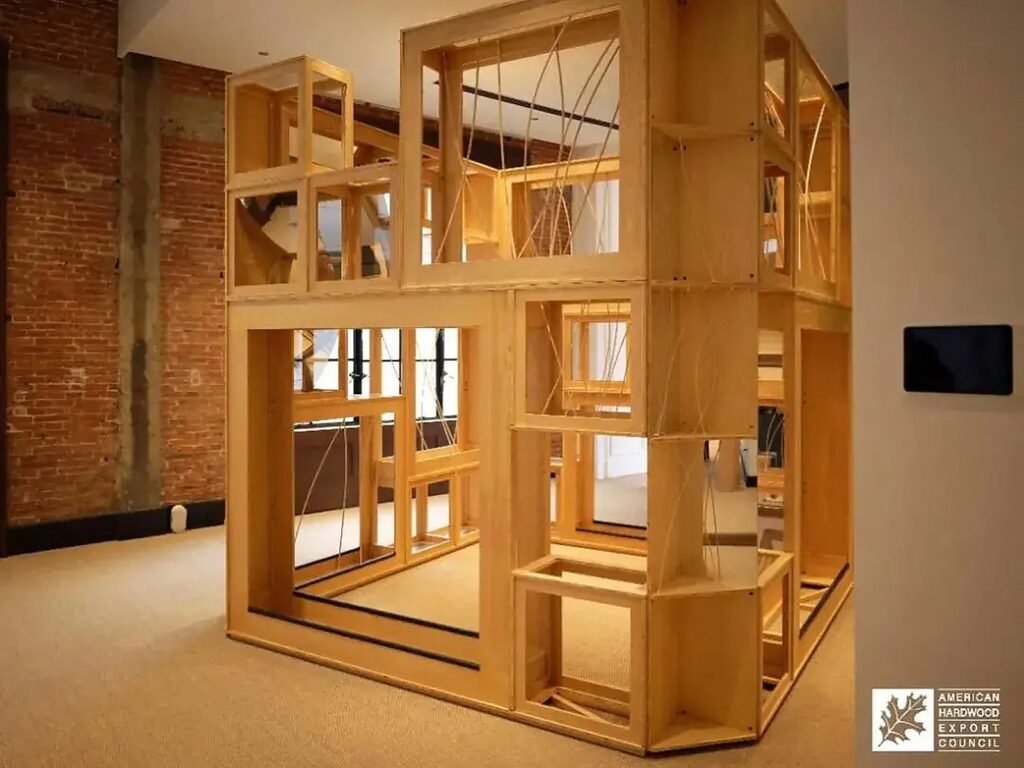
Red oak closes the show in designer Hou Zhengguang’s Dongtian, a frame of window openings that visitors fill with ash and maple dowels. Hou named it after the hidden entrance to an immortal realm in Taoist legend, a narrow passage that opens onto a whole other world.
Earlier this year, the film also shaped Wood for the Trees, the walk-through forest AHEC took to Copenhagen in June and London in September. In Shanghai, the curators at Cooollect staged Echoes of the Woods for AHEC two years ago, and their new show has nearly two more weeks to run.
Author
The Daily Digest
Get Wood Central's top timber stories in your inbox every weekday
Join thousands of forestry, timber and building professionals who start their day with the Daily Digest. It's free, and you can unsubscribe at any time.