


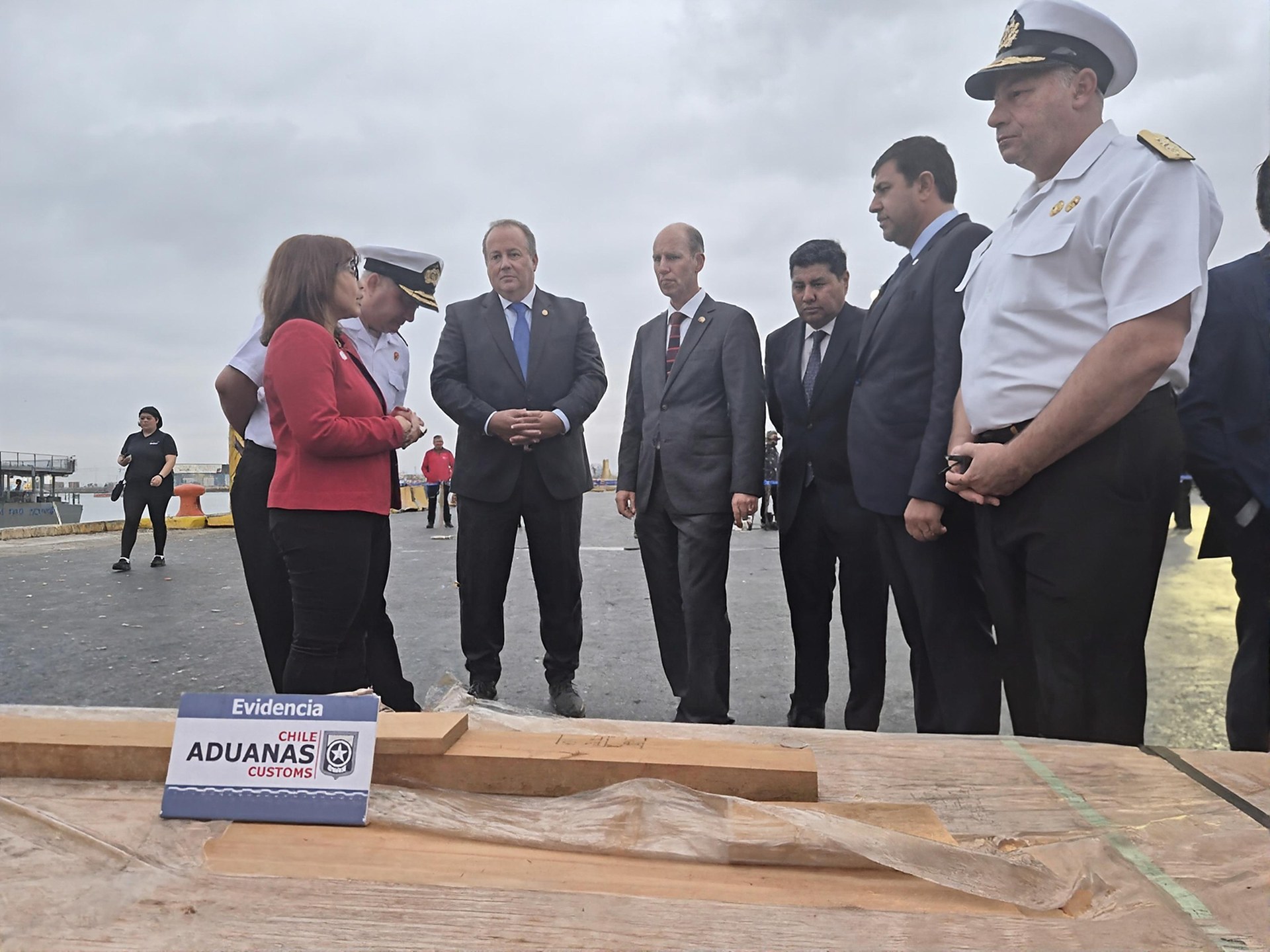
The Chilean prosecutors’ case that cocaine was smuggled inside Bolivian timber is unravelling before a court in Arica, with eight exporters filing a letter in which Bolivia’s customs service says it authorised none of Chile’s openings of 54 timber containers. It comes as Bolivia’s customs agent at the port wrote last month that his office holds no minutes, opening dates, or records of its officers at any of them.
“None of the containers was opened by Chile; all were opened by Bolivian customs at the request of our National Customs Service officers,” Mario Carrera Guerrero, Arica’s regional prosecutor, told a hearing last month. He said Chile could not open them itself because they were protected by the free transit treaty, whilst in more than 20 years he had never heard of Bolivia’s customs refusing a Chilean request to open one.
By contrast, Álvaro Cardozo Segurondo had written five days before the hearing that his agency “did not issue authorisation or take part in the openings described”, which he said fell under the criminal and territorial jurisdiction of Chile’s own authorities. He wrote that opening containers over drug finds inside the port falls “exclusively” to Chile’s police, judicial, and customs authorities, whilst citing the 1904 treaty and a 1937 convention that let Bolivia keep its own customs agencies at the port.
Those accusations date to June, when Chile’s prosecutors said cocaine and ketamine had been forced into 1,080 tonnes of Bolivian timber seized at three ports, in what they called the largest drug seizure in the country’s history. Prosecutors said the timber held 108 tonnes of drugs, but the exporters’ forensic expert has said traces below 5 per cent cannot support an estimate of 10 per cent or more of its weight.
“Bolivia’s National Customs did not receive official communication, notification, or summons from the Chilean customs authorities to take part,” states a June letter from Cardozo’s predecessor, Nelson Rivera Michel, to an Amazon development committee acting for a group of exporters. Rivera wrote that Chilean officers had opened the seals “without our authorisation”, and that his agency had already complained to its Chilean counterparts so they would not act without it again.
As it stands, Chile’s own customs rules let officers at Arica, Iquique, and Antofagasta inspect Bolivian cargo flagged by a drugs or contraband risk check, even under the 1904 treaty, but only if they “coordinate with the Bolivian customs agency”.
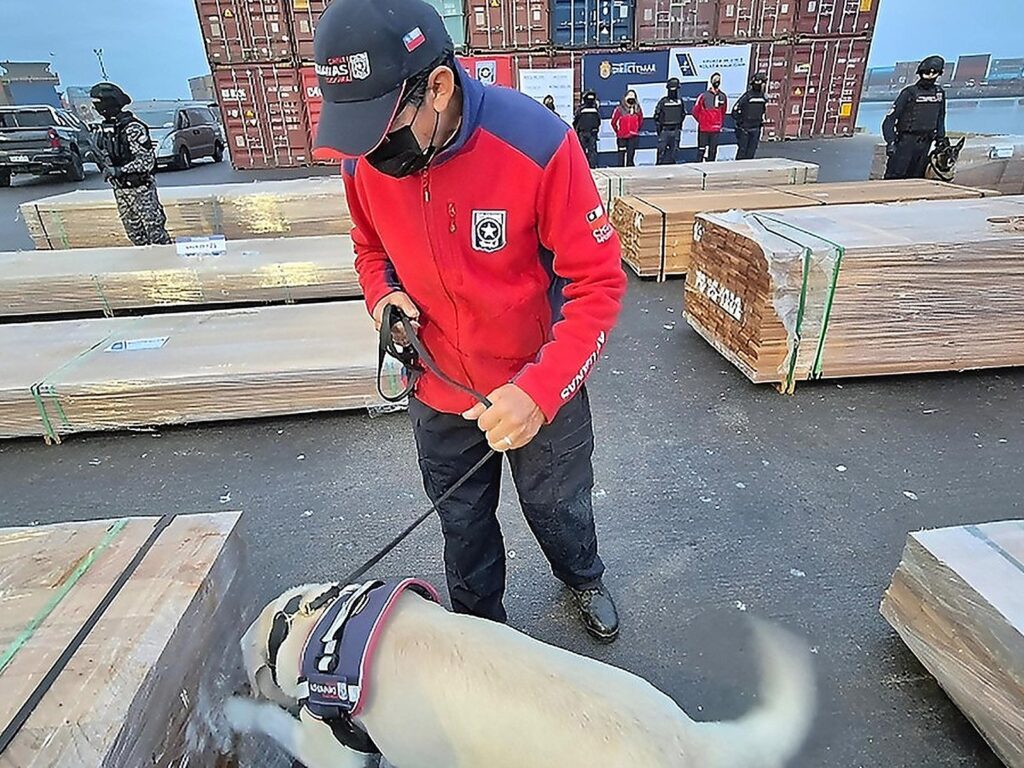
“Nothing in the 1904 Treaty ceded Bolivia criminal jurisdiction over what happens in Arica, nor turned its containers into extraterritorial enclaves,” Juan Ignacio Ipinza, a Chilean lawyer and political scientist, wrote last week. Ipinza argued that Bolivia may dispute how Chile exercised that control, but never its power to exercise it, whilst conceding that much of the timber was burned before the defence could contrast the analyses.
Cardozo’s letter went before the court through defence lawyer Daniel Guevara Cortés, whose eight clients among the 23 exporters are seeking to show their seized loads held no drugs and the investigation was flawed. At the same hearing where Carrera gave his account, Judge Juan Araya Contreras said the alleged impregnation at the heart of the case “could simply be traces or not”, as he halted the burning for 60 days.
Araya also agreed to broaden the sampling and lifted confidentiality on the case file, after defence lawyers showed that some containers had been tested on 9 to 11 samples rather than the 25 per container Carrera insisted had been taken. By then, Arica’s health service had burned all 48 seized containers held at the port between August and October, and the judge noted it had failed to send the destruction records to prosecutors within five days, as the rules require.
“We honestly think that in the rush to judgement even they do not know themselves what they have seized and what they have destroyed,” a European hardwood trader told Wood Central last month. He said many of the exporters he is in contact with were “never notified or contacted by the prosecutor” and only learned of the seizures “months later”, when overseas buyers chased missing containers.
That uncertainty reaches overseas, with Wood Central revealing last month that containers which tested negative in India, China, Peru, France, and the United States were still listed in Chile’s case files long after their release. Peruvian customs held one of those loads, Bolivian cumaru decking, at Callao for nearly 11 weeks before releasing it, whilst North American importers have told Chile’s ambassador in Washington that US authorities reported negative results too.
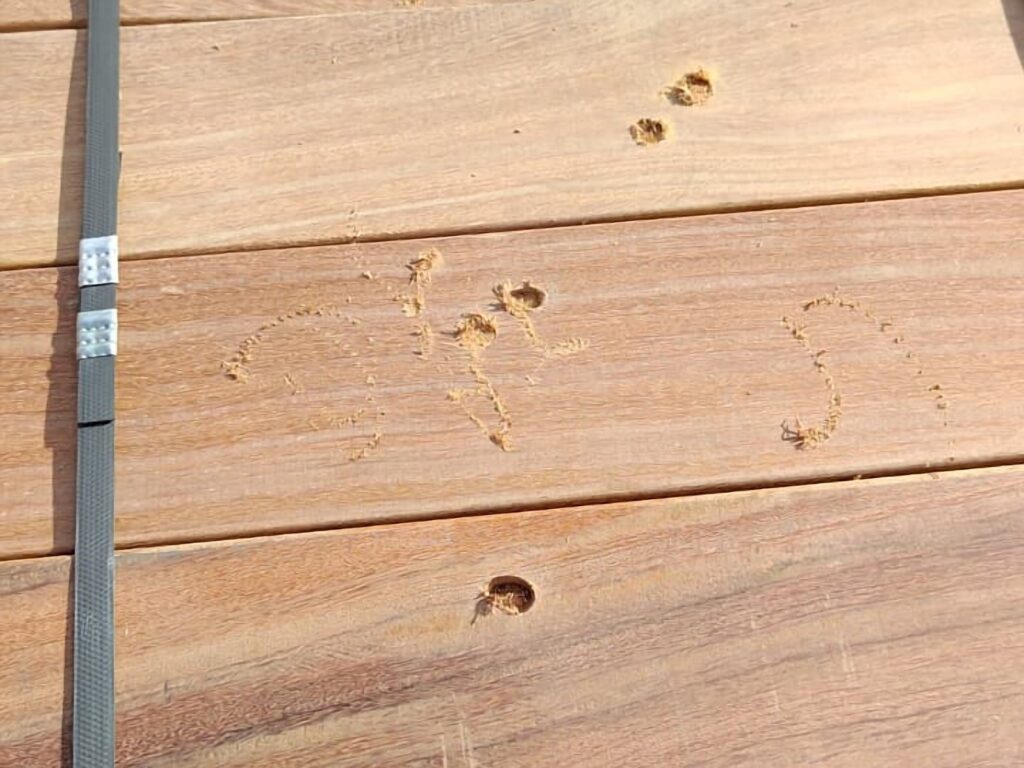
Carrera has nonetheless said there is “nothing irregular” in the work of the prosecutor’s office, the Navy, Customs, and the Public Health Institute, having said in September there was “no possibility of an alternative test” under Chile’s system. The institute has stood by its findings, with Boris Duffau, who heads its environmental health department, saying the same month that an extraction method developed for the wood had confirmed substances in more than 300 samples.
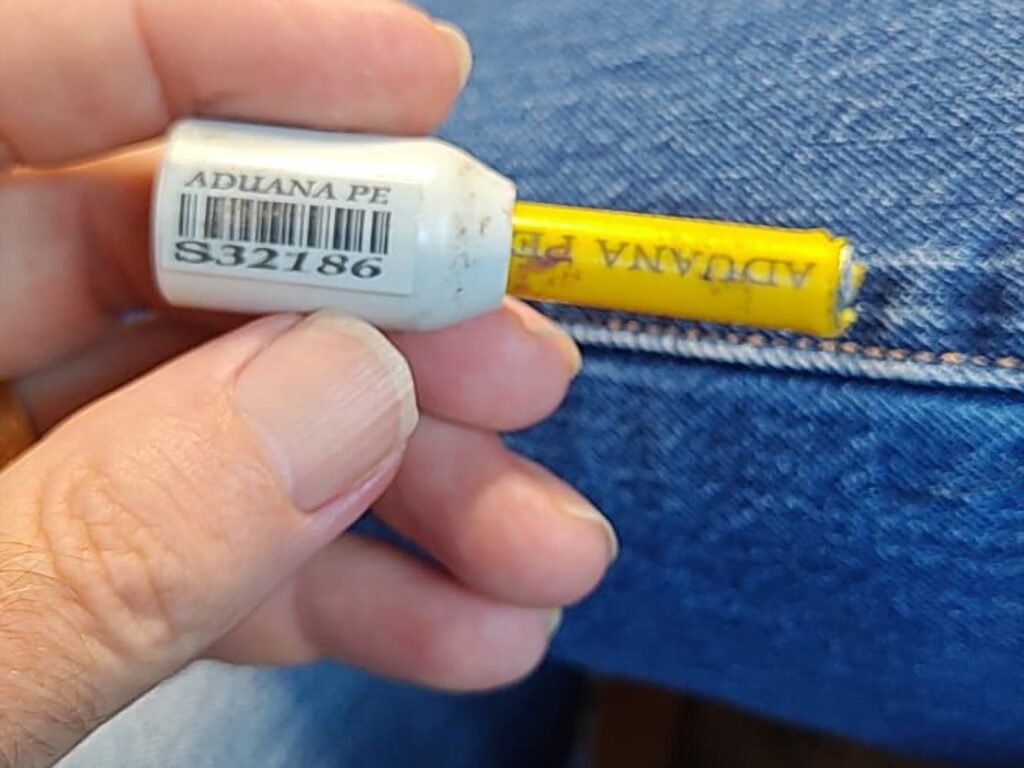
Before any retest can begin, prosecutors were due to put forward a public laboratory to replace the Public Health Institute at a hearing last Thursday, with the new laboratory to establish whether there are drugs in the wood.
Author
The Daily Digest
Get Wood Central's top timber stories in your inbox every weekday
Join thousands of forestry, timber and building professionals who start their day with the Daily Digest. It's free, and you can unsubscribe at any time.