


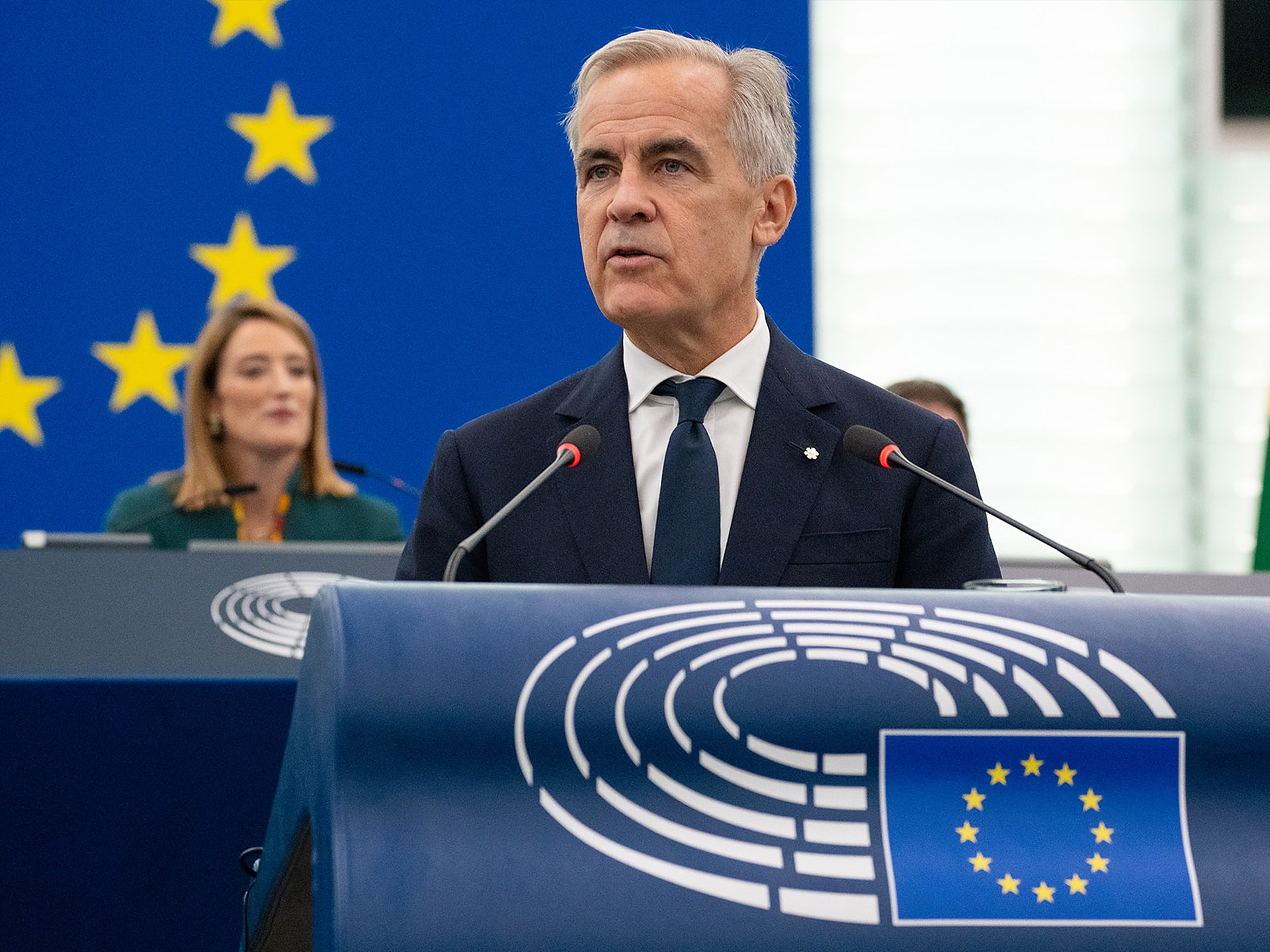
Canada’s forest industry is the latest to speak out against the European Union’s deforestation regulation in its current form, warning that its producers could incur tens of millions of dollars in unnecessary costs due to plot-by-plot tracing, despite Canada being rated low risk. That is according to the Forest Products Association of Canada (FPAC), which urged Canada and the European Union to tackle the regulation on the eve of Prime Minister Mark Carney’s address to the European Parliament last Thursday.
“The Canada–EU relationship has long been built on trust, shared values, and a commitment to rules-based trade,” said Derek Nighbor, president and chief executive of FPAC, which speaks for Canada’s wood, pulp, and paper producers. Nighbor wants the regulation implemented in a way that recognises Canada’s “world-leading position in third-party forest certification” and its “growing wildfire risks”.
It comes weeks after more than 1,000 members of America’s forestry community urged US President Donald Trump to press the EU to scrap plot-by-plot traceability for the United States, another country it already rates low risk. The EU’s low-risk label spares importers a formal risk assessment, but the plot-by-plot geolocation rule still applies to every shipment.
FPAC also warned that low-risk exporters such as Canada, Australia, and New Zealand face practical problems with plot-level tracing, large data uploads, and the handling of forest residuals. While “no one disputes the intent” of the regulation, it calls for EU decision-makers to recognise “negligible-risk countries” and to streamline tracing for low-risk trading partners.
Back in May, Canada’s forest industry took the case it made last October to the European Commission in a joint statement with the Australian Forest Products Association and groups from the United States, Japan, and New Zealand. The five cited producers estimate that a single shipment of pulp or paper can draw on thousands of individual plots of land, and that a single container can require “tens of thousands of geolocation data points”. They asked the Commission for a delegated act to remove forest residuals and sawmill by-products under heading 4401 from the product list for low-risk countries, and to set geolocation at the country rather than plot level.
The five also argued that the easing agreed in December was available only to downstream operators and small firms based inside the EU, creating “a very unequal playing field for low-risk countries outside the EU”. All five come from countries in the EU’s low-risk tier, as do all 27 of its member states.

However, the Commission ruled out reopening the regulation in its simplification review days later, saying its measures would cut companies’ annual compliance costs by 75 per cent compared with the original regulation. It also turned down a request in July to remove sawmill residues from the final product list, finding that the request lacked the backing of the industries it would have covered.
That list came into force last Friday, with used wood, bamboo, and rattan carved out whilst sawmill chips and sawdust under heading 4401 stay in scope unless they qualify as waste. The Commission exempted used wood to avoid “discouraging circular and resource efficient practices”, while FPAC says residues are already “part of circular, sustainable forest product value chains”.
The EU bought US$115.89 million worth of Canadian chips, sawdust, pellets, and fuelwood under heading 4401 last year, according to UN Comtrade, with the EU as the reporter, more than it spent on any other Canadian wood product. Sawn wood followed at $107.02 million, down from $242.47 million for Canadian wood overall, with a further $174.43 million for Canadian paper and paperboard.
“Even if a country is rated low risk on deforestation, it doesn’t mean it’s low risk on legality,” Kerstin Canby, senior director of Forest Trends’ forest policy, trade, and finance initiative, said last year. Canby warned that origin information tends to “disappear” when timber is processed in low-risk hubs and re-exported to Europe.

Meanwhile, Carney’s address to the European Parliament did not name the regulation, with the prime minister proposing cooperation on critical minerals and energy security alongside “seamless, digital trade in non-agricultural goods”. As it stands, Canada will host the next EU–Canada summit at the end of next month, two months before the regulation applies on 30 December.
Nighbor said FPAC looks forward to seeing “a more durable path forward for Canadian exporters, European customers, and the thousands of families connected to Canadian forestry”.
Author
The Daily Digest
Get Wood Central's top timber stories in your inbox every weekday
Join thousands of forestry, timber and building professionals who start their day with the Daily Digest. It's free, and you can unsubscribe at any time.

