

Timber mills across Europe are set to cut softwood production in 2026, the very year the industry had banked on for a recovery, with output already 10 per cent below its 2021 peak. That is according to the European Organisation of the Sawmill Industry (EOS), which on Tuesday released the projections it gave a record 300 delegates at last week’s International Softwood Conference in Dublin.
“With inflation coming down, 2026 could be the year of recovery in the construction markets,” Morten Bergsten, vice-president of the European Timber Trade Federation (ETTF), said in Oslo last October. A year on, he told delegates in Dublin that consumption has instead held steady below its 2021 peak, and that a bigger slice of a much smaller market still leaves Europe using less timber.
Instead of a rebound, EOS now expects output across its 14 member countries to fall a further 4 per cent this year, driven by sharp declines in Germany and Sweden, the two largest producers among them. It estimated German mills sawed 20.3 million cubic metres in 2025, 9 per cent less than in 2024, whilst Sweden held level at 17.89 million before this year’s slide.
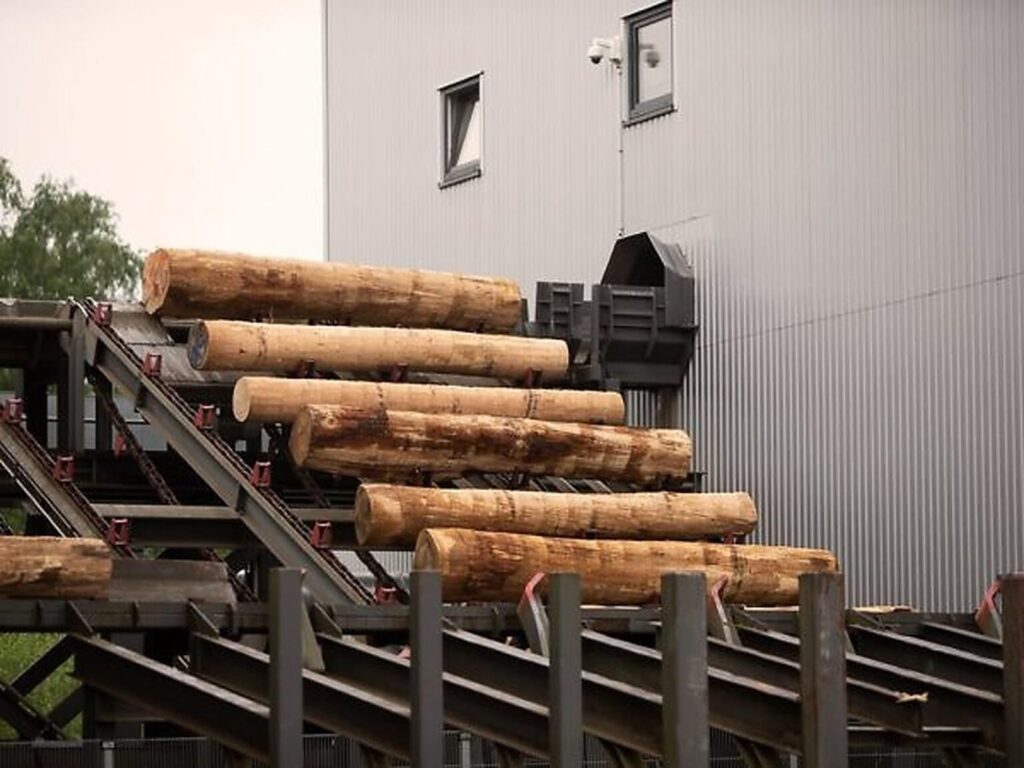
The cut is falling hardest on spruce, Tommi Sneck, the EOS president, told delegates in Dublin, a year after he warned the Oslo conference that mills were already seeing “reduced availability of spruce logs”. He also urged the industry in Oslo to promote pine as a structural timber, warning that “the share of pine in production will increase compared with spruce”.
It comes as mills are caught between costly logs and yet another fall in lumber prices this autumn, with EOS saying profitability across the sector remains poor. It warns that securing logs at affordable prices “will be an issue which will dominate the markets in coming years”, with many member countries already reporting sawnwood prices adrift from what logs cost.
Meanwhile, the Swedish Forest Agency expects the country’s sawn timber production to fall 4.5 per cent this year, with the harvest set to sink to its lowest level since 2012. Forest group Holmen has already curtailed its sawmills, delivering 943,000 cubic metres in the nine months to September against 990,000 a year earlier, whilst cooperative Södra swung to a 530 million Swedish kronor sawmill loss in the first half.
Exports offer no way out either, with EOS expecting a decline that has run for several years to be even more pronounced this year. Holmen, for one, saw its wood products sales into Asia fall to 135 million kronor in the nine months to September from 179 million, whilst its sales elsewhere outside Europe dropped to 454 million kronor from 636 million.

As it stands, EOS expects European production to stay below its 2021 peak, though it says the industry could recover without construction returning to pre-2022 levels. Any rebound could bring a fresh squeeze, with Canadian lumber analyst Russ Taylor warning delegates that today’s short-term demand problem may give way to a global log shortage once demand returns.
Author
The Daily Digest
Get Wood Central's top timber stories in your inbox every weekday
Join thousands of forestry, timber and building professionals who start their day with the Daily Digest. It's free, and you can unsubscribe at any time.