


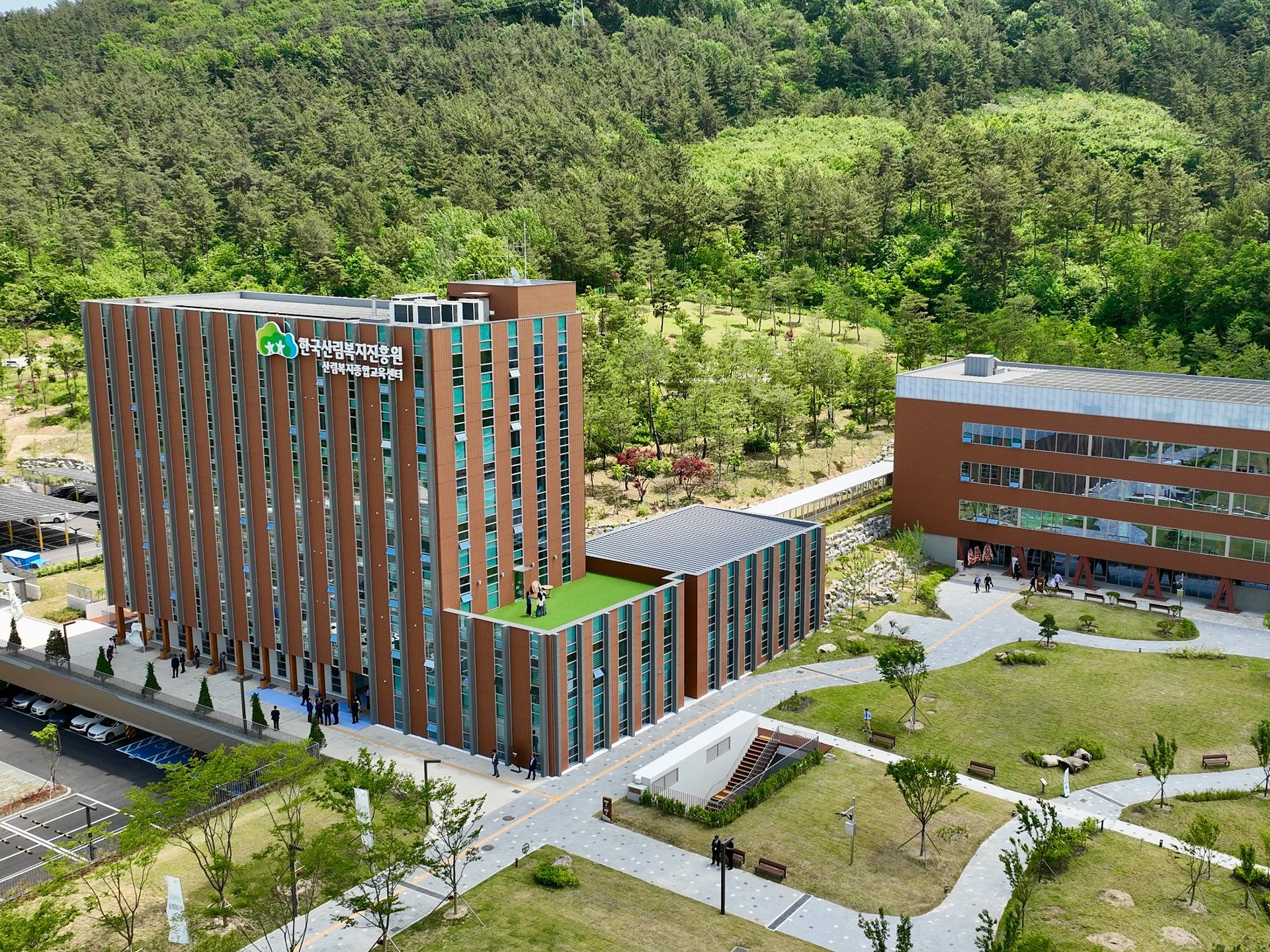
National agencies and forestry public bodies in South Korea can now take state forest timber free for wooden building research and demonstration projects, with the change linked to the country’s goal of carbon neutrality by 2050. That is according to the Korea Forest Service, which said on Thursday that the amended National Forest Act took effect six months after its promulgation.
“By expanding the use of domestic timber, starting with the public sector in the lead, we will drive demand for domestic timber,” Park Eun-sik, Minister of the Korea Forest Service, said. Park pledged the Forest Service would “spare no institutional support” so home-grown wood helps both the timber industry and Korea’s greenhouse gas reduction target.
“Promoting wooden construction to enhance carbon sinks,” states the new clause in Article 29 of the act, beside a second purpose of research that advances forestry science. The article had previously limited free state forest products to disaster prevention and relief, and to firewood thinnings handed to farmers and fishers.
Public bodies wanting state timber had to buy it by private contract, either for public use or to foster the domestic timber industry. It now goes to them free, although the act still caps timber production in state forests at the trees’ annual growth.
The National Institute of Forest Science, the Forest Service’s research arm, has built in Korean larch since 2016, when it opened a four-storey research building in Suwon, in Gyeonggi Province. It reached the 18-metre height that Korean building law then allowed, before winning the Korea Public Architecture Award run by the Ministry of Land, Infrastructure and Transport.
Three years later, the institute opened what was then Korea’s tallest wooden building, the 19.12-metre Hangreen in Yeongju, in North Gyeongsang Province. The Forest Service called it “an important example” of Korean wooden construction, built on cross-laminated timber the institute developed from Gangwon Province larch.
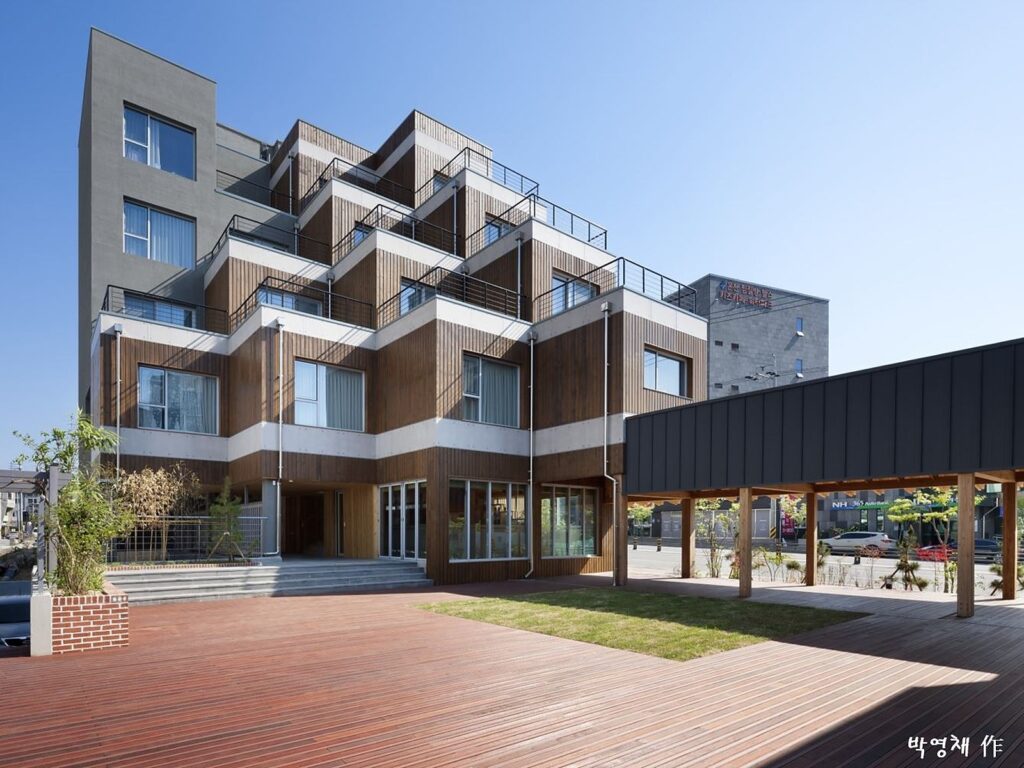
“Those height regulations have since been abolished,” Yang Pyeong-gang of the Korea Forest Welfare Institute said of the 18-metre cap that once held wooden buildings down. His institute’s seven-storey Forest Welfare Comprehensive Education Centre in Daejeon, a timber and reinforced-concrete hybrid, opened last year as Korea’s tallest wooden building, at 28 metres.
Two-thirds of the centre’s 1,449 cubic metres of timber is Korean larch, which the Forest Service says stores 242 tonnes of carbon. By contrast, Korea’s first timber high-rise, a 13-storey apartment tower designed by Seoul practice Gansam, is rising in cross-laminated timber milled from Finnish spruce.
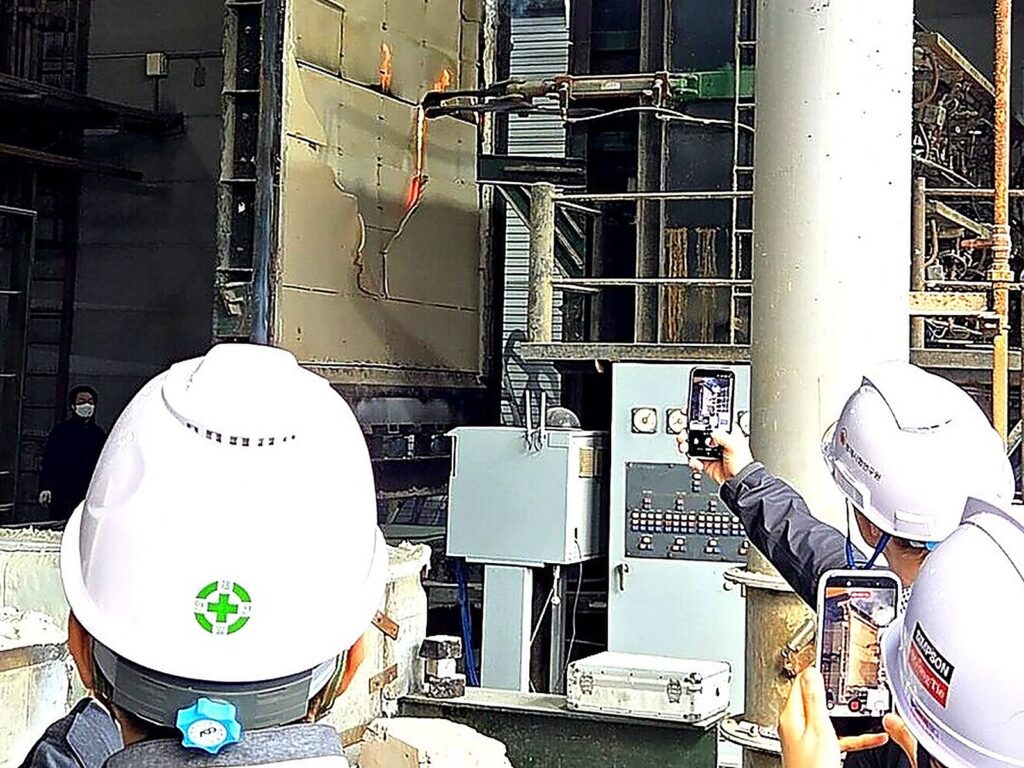
Only the foundation of that tower is reinforced concrete, with seven-layer cross-laminated timber walls and floors bearing the load above it. A two-hour fire test cleared at a Korean laboratory in February opened certification for mass timber to 12 storeys, with a three-hour rating now in testing.
Imported wood still dominates, with Korea’s own forests supplying only 16.6 per cent of the country’s wood in 2019, down from 17.4 per cent in 2013. That is according to the Korea Forest Service, which counts imported sawn timber, panels, and pulp at their log volume in its national tally.
Park said in April that Korea’s forests already hold more than a billion cubic metres of timber, which the Forest Service wants used instead of fossil-fuel materials. Korean logs accounted for 62 per cent of the 6.9 million cubic metres of logs used in 2019, but that figure excludes sawn timber, panels, and pulp.
Meanwhile, Japan lifted its wood self-sufficiency from a record low of 18.8 per cent in 2002 to 40.7 per cent in 2022. Its government now wants 500,000 cubic metres of cross-laminated timber a year by 2030, after Japanese mills produced just 19,000 cubic metres of the panels last year.
It comes as Japan’s new schools go hybrid with timber linings, and as a forester in the US Congress pushes America to build with its own wood. US lawmakers want more mass timber factories as well, which they argue would cut housing costs.
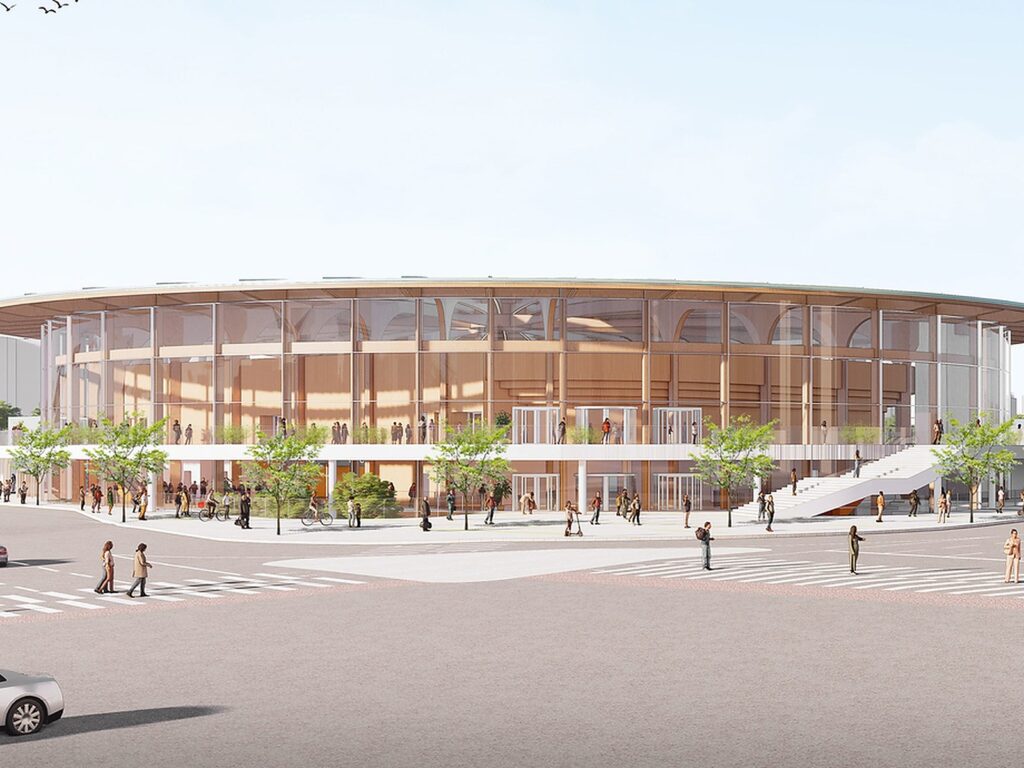
Seoul’s city government has also picked a circular design for Korea’s first large-scale hybrid timber arena, a 199.9 billion won venue on the Han River. Construction is scheduled to start in 2028, with the venue for taekwondo, judo, and wrestling due to open in 2031.
Another Forest Service body, the Korea Forestry Promotion Institute, has its own seven-storey timber headquarters due in Daejeon by the end of this year. The Forest Service is working with the land ministry on a separate law to promote wooden construction.
Author
The Daily Digest
Get Wood Central's top timber stories in your inbox every weekday
Join thousands of forestry, timber and building professionals who start their day with the Daily Digest. It's free, and you can unsubscribe at any time.