
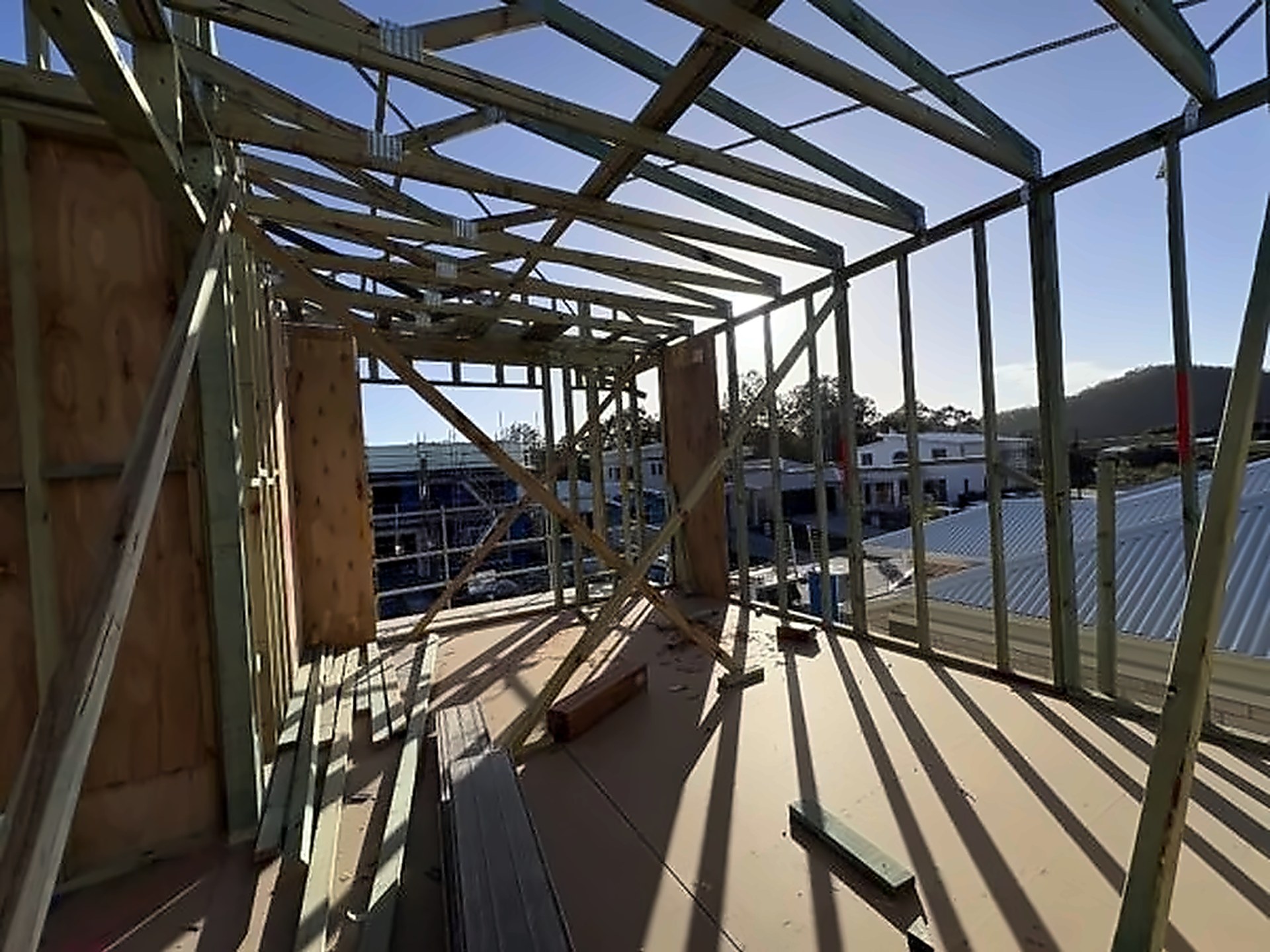
Builders across Australia are paying a premium for laminated veneer lumber (LVL) over traditional framing materials because it saves them on-site labour, with imports of the engineered wood reaching a record 254,065 cubic metres last financial year. That is according to Simon Dorries, general manager of the Australian Timber Importers Federation (ATIF), who this week responded to forestry consultant Steve Walker’s finding that imports now meet most of the extra demand for framing timber.
“LVL is probably our best tool (maybe our only tool) to fight and slow down the increasing market share of steel framing,” said Dorries, who led the Engineered Wood Products Association of Australasia for nine years. Looking around some new developments near him, he estimates steel would have close to half the market.
Those developments are in a capital city, where steel’s share will be strongest and most houses in the developments were being built by the same builder, Dorries conceded. Even so, he said domestic and imported timber suppliers alike “need to come together and join forces to counter the real long-term threat of non-timber competitors”.
Frames built with LVL have saved the builders Dorries has spoken to substantial labour straightening them before plastering, he said. Dorries said LVL appears dearer than sawn pine as an overall trend, although “pricing will vary all over the place”.

Australia’s softwood processors seem more supply constrained than in the past, according to Dorries, who expects “the 2019 fires in NSW and later fires in Victoria” to have hit log supply over the medium term. That echoes Walker, who put prices holding near their 2021-22 peak down largely to structural constraints, with fire and cyclone-salvage logs running out in NSW and Queensland after 2020-21.
ATIF concurs with Walker that product quality and conformity to Australian Standards should be a major focus, Dorries said, with its members understanding the processes needed to comply. By contrast, many importers, mainly small ones that are not ATIF members, may lack a strong understanding of conformity assessment and may be bringing in products at risk of non-compliance, he said.
“Anywhere solid timber is being used LVL is coming up with an alternative and many cases superior alternatives,” said Robert Cairns, an ATIF director. Part of the growth in LVL volumes comes from new products, he said, with LVL studs and plates now imported to substitute for MGP10 and MGP12 pine.
Elsewhere on his list, an E14-grade LVL substitutes for F17 hardwood, whilst H3-treated LVL, in structural and primed forms, is now imported for outdoor use. Whatever the product, ATIF members make sure their LVL is legal, compliant, and fit for purpose, Cairns said, and keep it correctly branded and tested to back up any grading or certification claim.
All of that adds cost, he said, so compliant LVL, even the framing-size E10, is more expensive than solid MGP10 framing from imported or local sources. The price anomaly comes from small importers that “either are unaware or don’t care what they are buying”, Cairns said, with their product frequently stamped incorrectly and of questionable legality and compliance.
Some of those importers also sell direct to builders through marketplace listings, he said, and so cut out the margin an importer would normally add before wholesaling to a merchant or truss manufacturer. For Cairns, the priority is making sure “what is being imported is compliant in every aspect”.
Author
The Daily Digest
Get Wood Central's top timber stories in your inbox every weekday
Join thousands of forestry, timber and building professionals who start their day with the Daily Digest. It's free, and you can unsubscribe at any time.