
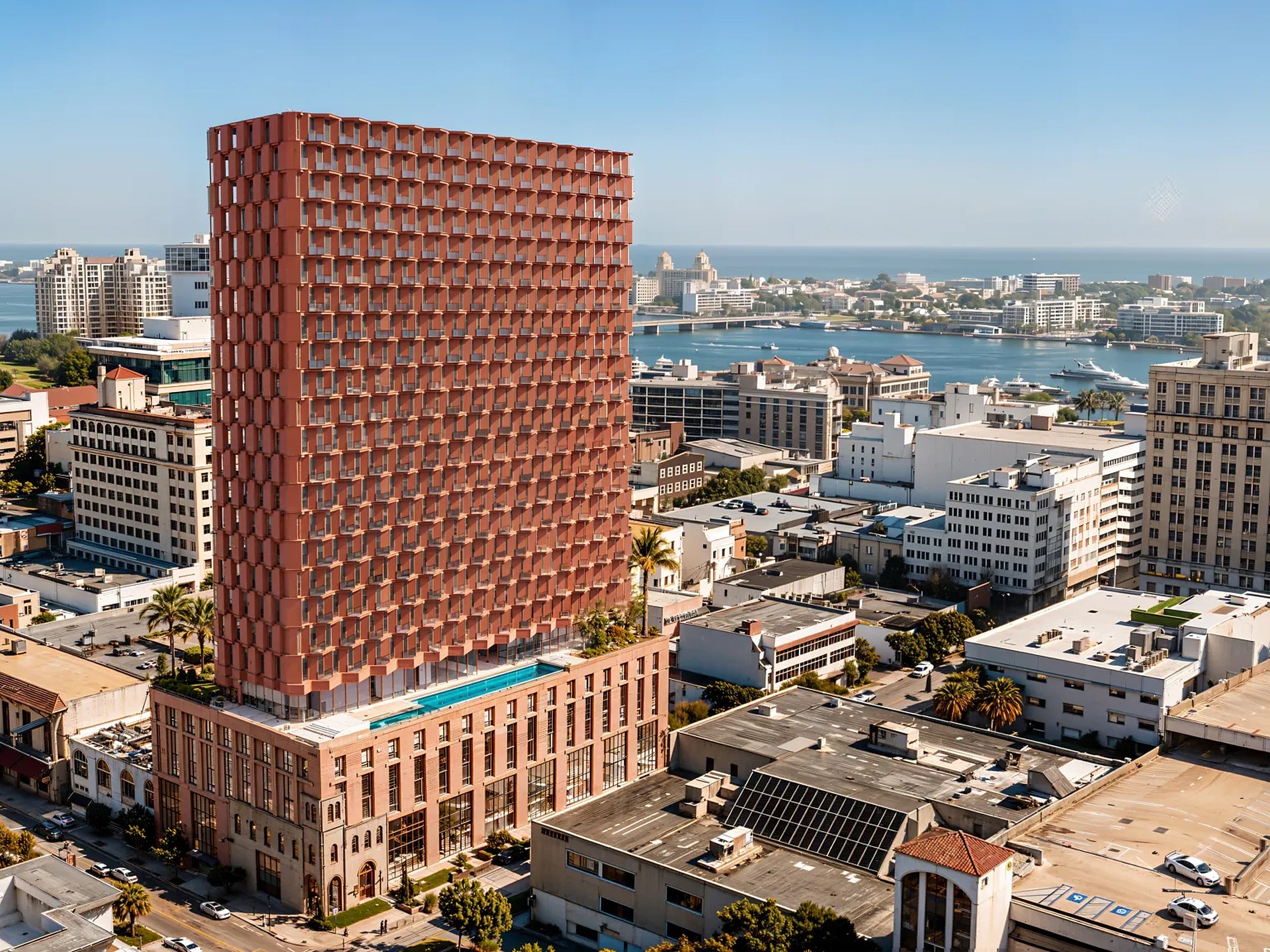
A West Palm Beach building official will judge Florida’s tallest wooden building alone, because the state’s building code holds no provisions for the material. That is according to the Building Officials Association of Florida, whose code development committee co-chair says a jurisdiction’s first mass timber project leaves the call to one person. CRA-Carlo Ratti Associati published its design for the 25-storey MiMar tower in the city’s downtown this month, calling the frame aligned with Florida’s emerging rules for tall timber.
“That is a position a building official does not want to be in,” said Scott McAdam, the Indian River County building official, describing what the alternative means and methods clause leaves to a single person. McAdam’s association wrote to the Building Commission in support of the changes, alongside the Florida Forestry Association and The Nature Conservancy of Florida.
The Commission voted those changes down against the advice of its own fire and structural experts, and the American Wood Council blamed competing material interests and misleading testimony for the defeat. The three rejected types set ceilings of 18, 12, and 9 storeys for mass timber, and each had cleared the International Code Council’s consensus process.
Tall timber sits in the codes of 44 other states, which leaves a Florida project to clear the alternative means and methods clause one application at a time. Mass timber assemblies have already passed the world’s first three-hour fire-resistance test, the rating the tallest of the rejected types requires.
“In the collective imagination, Palm Beach is the antithesis of affordability,” said Carlo Ratti, with the practice’s founding partner asking in the same release whether coastal living could be made accessible to all. Forty per cent of the homes would go to workforce households under the Live Local Act, the 2023 law that trades height and density for long-term affordable housing.
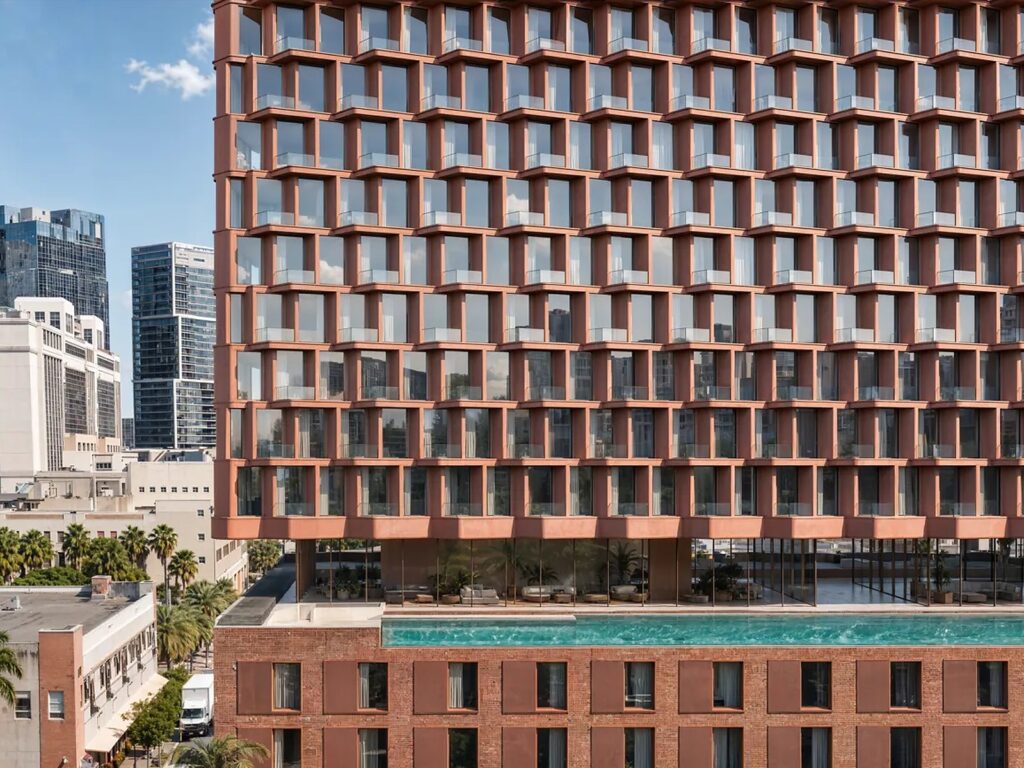
Live Local approval moves administratively once a filing meets the statutory checklist, which means no board vote and no public hearing are required. The official would still hold MiMar to the wind, hurricane, and termite rules Florida demands of steel and concrete.
“I’m sure before it gets permitted, they’ll do all the testing to make sure that it’ll have the right strength,” said Jeff Greene. The billionaire developer told Stet News he had kept the six-storey facade of an 1870s Manhattan power plant under 19 new storeys. MiMar would sit atop the two-storey base and bell tower of a West Palm Beach fire station dating to the early 1900s.
Approved plans for Pensacola’s Maritime Park include the 16-storey Rhythm Lofts and the 11-storey Reverb by Hard Rock hotel, the tallest mass-timber structures in the state. Hines took Fort Lauderdale’s first mass timber office through the same clause at six storeys. MiMar first surfaced in May, when West Palm Beach’s Plans and Plats Review Committee reviewed the proposal and returned it for changes.
Senator Erin Grall wrote a mandate into a 2025 construction bill ordering the Commission to recognise tall mass timber by the start of this year, and lawmakers stripped it before the bill became law. The American Wood Council now waits on the Commission’s annual amendment window, the one opening it has before the 2027 development cycle.
Author
The Daily Digest
Get Wood Central's top timber stories in your inbox every weekday
Join thousands of forestry, timber and building professionals who start their day with the Daily Digest. It's free, and you can unsubscribe at any time.