


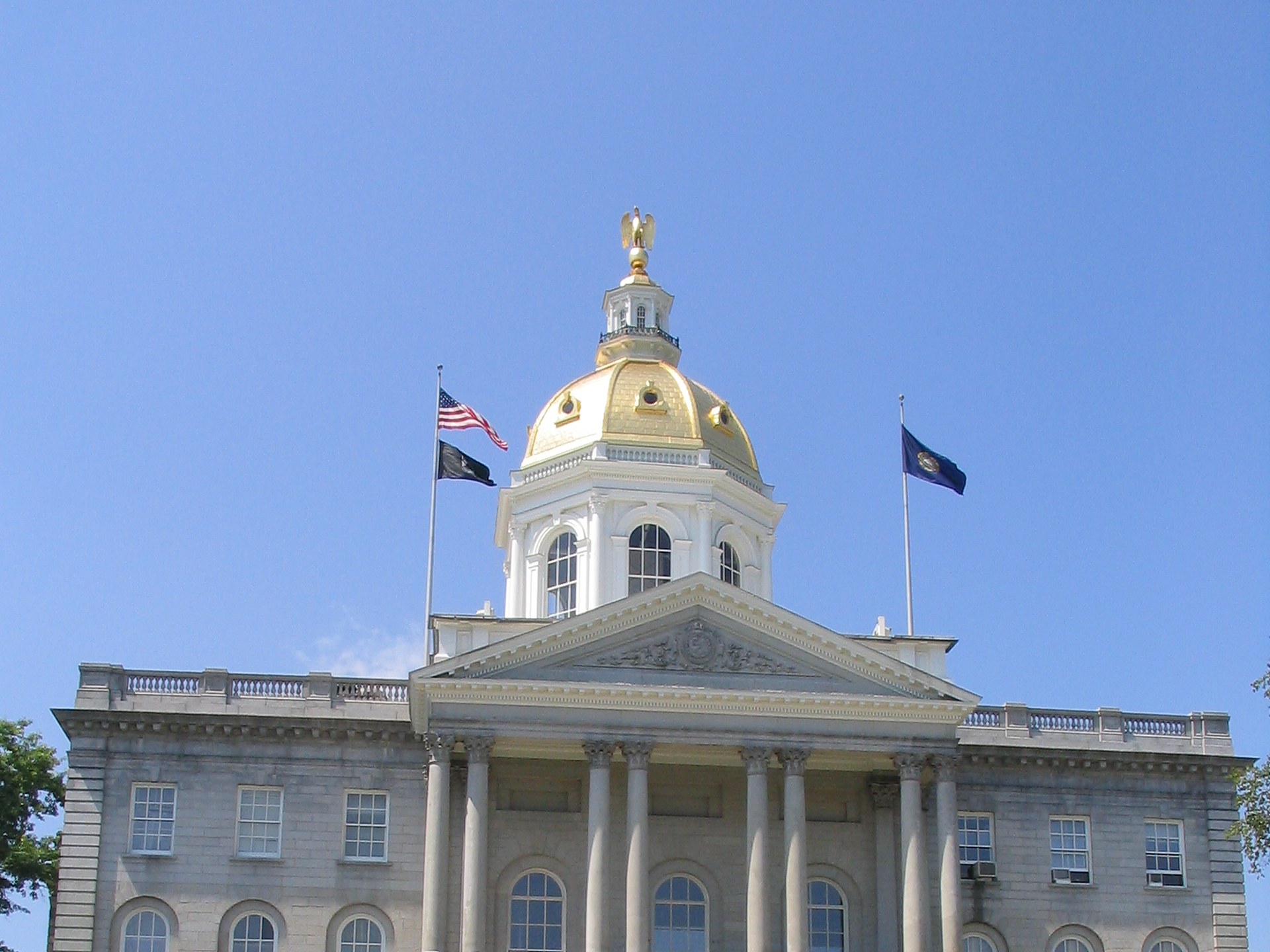
Lawmakers in New Hampshire have given American lumber a preference on every state-funded building project, and the rule has applied to drawings and specifications since 18 August. That is according to the New Hampshire General Court’s record of Senate Bill 529, signed into law on 19 June as Chapter 193.
“The material specification of any state-funded building in New Hampshire shall give preference to lumber harvested in the United States, unless design criteria necessitate utilising imported sourcing,” the act states. A second paragraph instructs that construction drawings using softwood framing harvested in the United States reference United States-sourced spruce-pine-fir, written into the statute as SPFs.
Legislators moved it through both chambers without a recorded vote against it. The Senate committee reported it ought to pass 5 to 0 on 29 January, and the House Public Works and Highways Committee did the same 14 to 0 on 31 March.
Both chambers then passed it on voice votes, and neither took a roll call. Six Republicans sponsored it, among them Arnold Davis and Mike Ouellet, who represent Coös County districts in New Hampshire’s far north.
The Division of Public Works Design and Construction told legislators it could not provide a price for the change. Labour costs, market demand, interest and mortgage rates, and tariffs all move the building industry, the division said, leaving the fiscal impact indeterminate.
Washington is the only other state whose lawmakers have put a timber preference on paper, and its bill has not left committee. “Prioritizing Washington mills over other mills around the country is a no-brainer,” Kevin Waters said, with the Stevenson Republican introducing House Bill 1726 in January last year.
Waters set the order himself, sending any project that spends more than US$500,000 of state money to Washington mills first, then Oregon, then the rest of the country, and last to other countries. The bill has sat in the House Capital Budget Committee since a public hearing on 11 February 2025.
MultiState counted 233 domestic-procurement bills introduced across the country this year when it refreshed its tally on Friday, against 196 in July. Steel and iron take almost all of them, and the tracker still lists New Hampshire’s as introduced.
Australian unions have put the same lever in front of Canberra, in a blueprint published in July that makes government purchasing the first move in its plan for factory-built housing. Australian-manufactured content rules across the audited public procurement pools would buy almost 15,000 additional public dwellings within existing budgets, according to its modelling.
As it stands, a state preference sits outside the tariff schedule altogether, and no trade case has to be filed for it to reach a supplier. Canadian softwood already pays stacked antidumping, countervailing, and Section 232 duties at the American border.
Since 15 September, the 50 per cent Section 338 duty has applied on top of Section 232 on the goods listed in its annexes. American dealers told Congress a day earlier that the duty risks shortages of engineered wood that their members cannot source domestically.
Starting in October, a second section of the same building code chapter applies to the grade stamp itself. Spruce-pine-fir-south harvested and milled in New Hampshire “shall be accepted wherever spruce-pine-fir (SPF) is specified,” the statute instructs, with structural design to use the published SPFS values for the grade and size supplied.
Author
The Daily Digest
Get Wood Central's top timber stories in your inbox every weekday
Join thousands of forestry, timber and building professionals who start their day with the Daily Digest. It's free, and you can unsubscribe at any time.

