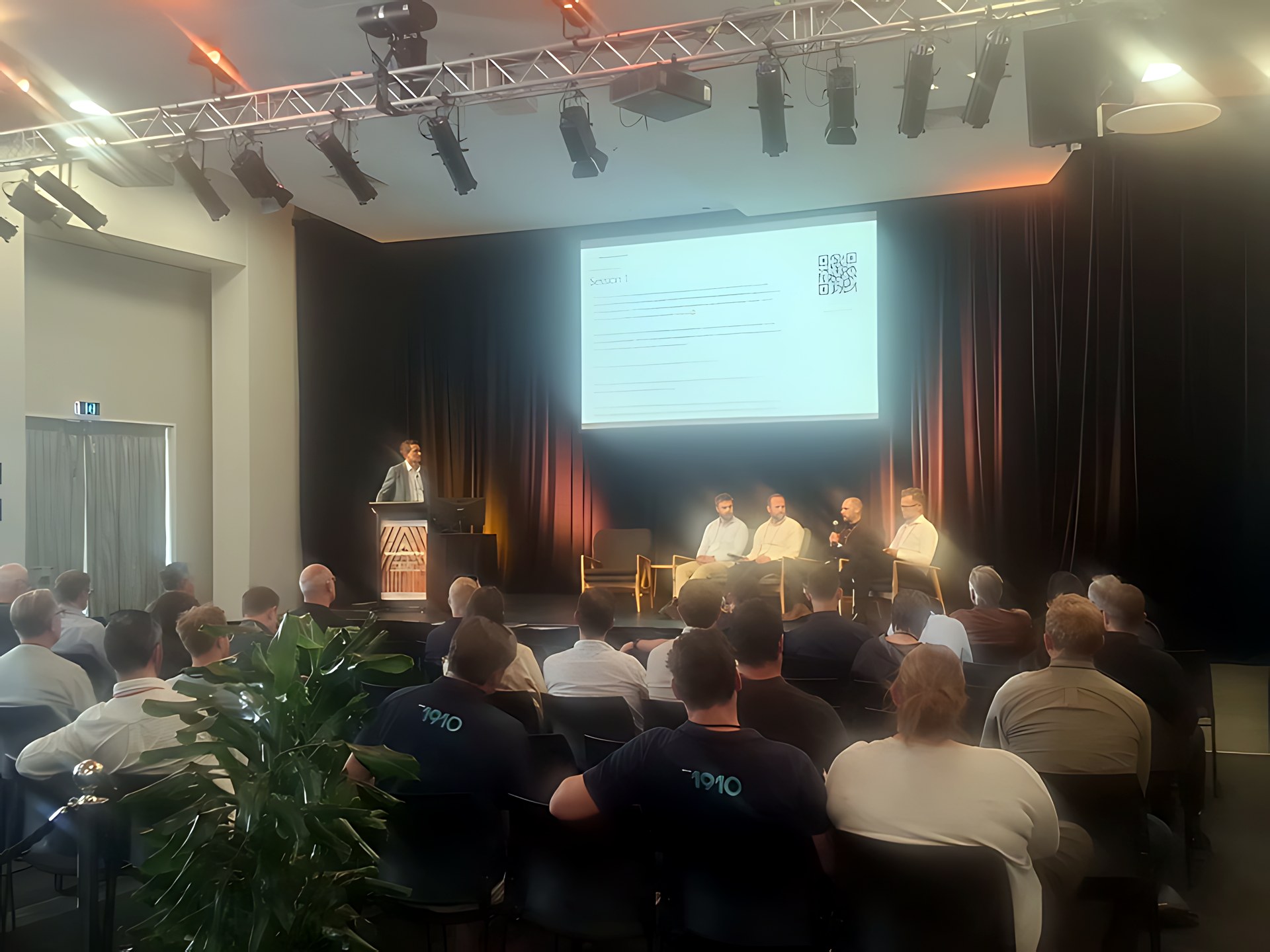
One line in a timber specification stands between New Zealand builders and a wider field of certified wood, with nearly half the delegates at WoodWorks 2026 in Hawke’s Bay writing or pricing those specifications. That is according to Richard Laity, PEFC International’s South Pacific programme manager, who told the conference last Thursday that most New Zealand specifications name one system, narrowing supply to whoever holds that certificate.
“The gap here is not policy, it is awareness,” Laity said, explaining that architects default to one system out of habit. In fact, he said, plenty of people believe the Green Building Council does not recognise PEFC, a belief he answered from the stage with two words: “It does.”
Under Green Star, the Green Building Council of Australia rates the joint Australian and New Zealand forest management standard as good or best practice in all four of its responsible products credits. In New Zealand, the Green Building Council runs the same programme in partnership with its Australian counterpart, so certified products count toward both Green Star and Homestar ratings.
As it stands, more than 600,000 hectares of New Zealand forest is PEFC certified across five certificates, whilst 25 New Zealand companies hold certification, Laity told the room. He singled out Air New Zealand’s Hangar 4, the world’s largest aircraft hangar built from mass timber, saying some suppliers on projects like it are “already delivering PEFC material.”

Laity said the pressure in the room was not to use more timber, but “to prove the timber you used.” Under PEFC’s new Project Sourcing standard, in force since June, builders can now do that across every job through a single certified system, rather than certifying one building at a time.
Put simply, Laity said, certification can be used “on the t-shirts, the mass construction, rather than only on the ballroom gowns, the one-off special projects.” To qualify, a finished project needs at least 70 per cent PEFC-certified timber, with recycled material, controlled sources, and other certified wood able to make up the rest.
Rather than a loophole, the remaining 30 per cent is “the windows, the trims and the one species nobody can get certified this quarter,” Laity said. There is a selling point for developers too, with a project recognised as an applicant as soon as its sourcing system passes a first audit.
That way, Laity said, “you can put it in the sales material while the crane is still up.” More than 60 projects in 12 countries have gained PEFC project certification since 2008, and Laity wants New Zealand’s first under the new standard to be “one of yours.”
Hours after the session, delegates were on site touring Heretaunga House, the four-storey mass timber office rising in central Hastings, before walking through Te Aka, Napier’s new library. Napier City Council is targeting a 5 Green Star rating for the library, which also houses a council meeting space.
“Many of our members are already producing certified timber. The challenge is ensuring it is specified in projects,” said Mark Ross, chief executive of the Wood Processors and Manufacturers Association. As chair of PEFC New Zealand, Ross said WoodWorks is where that connection gets made, with certification and environmental product declarations finally getting airtime this year.

For those wanting to try the standard, Laity said a revitalised PEFC New Zealand is the quickest route in. He urged anyone specifying timber in the next 12 months to talk to him “before the specification is locked”, when the change is “cheap to do and expensive to retrofit.”
Editor’s note: This article is based on material supplied to Wood Central by PEFC International. For more on PEFC project certification, visit the PEFC New Zealand website.
Author
The Daily Digest
Get Wood Central's top timber stories in your inbox every weekday
Join thousands of forestry, timber and building professionals who start their day with the Daily Digest. It's free, and you can unsubscribe at any time.