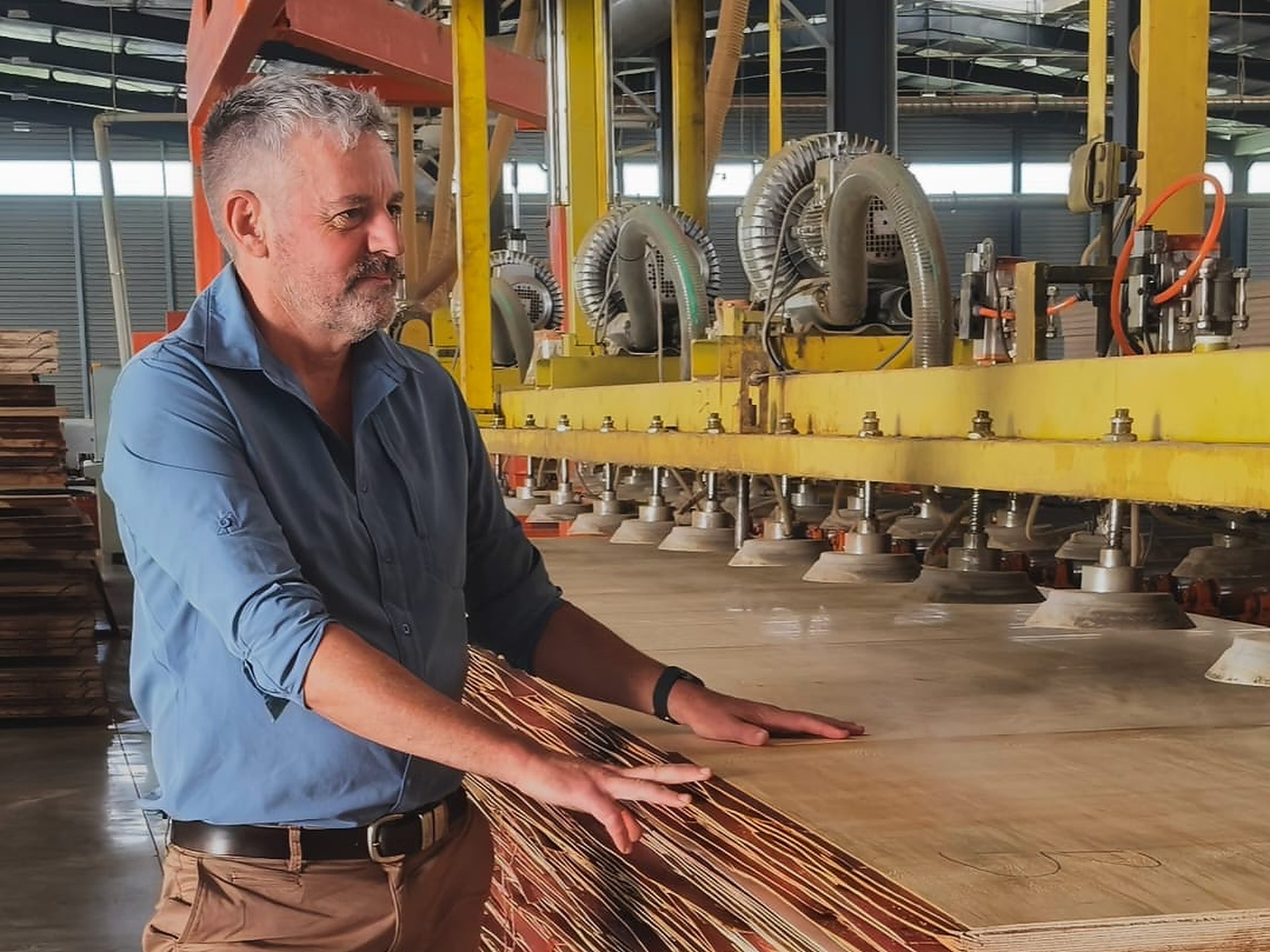
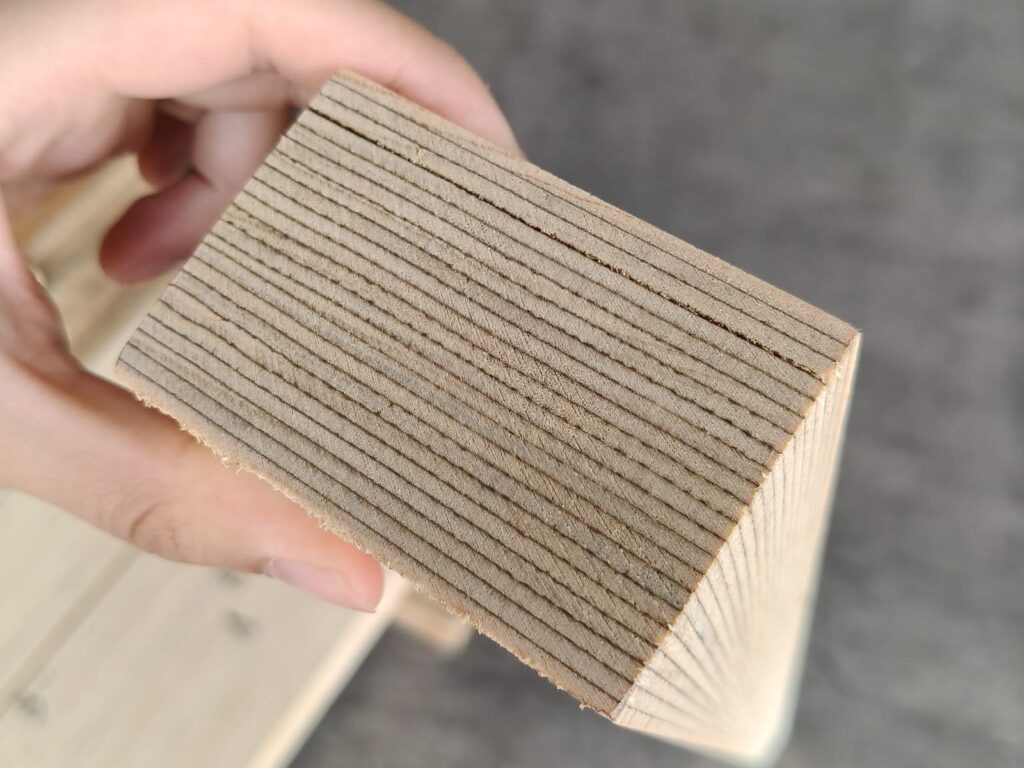
Queensland’s plantation hoop pine, marketed as Australian Araucaria, has been processed into structural LVL in China under contract for Corbets Group following resource mapping and research conducted with the state’s Department of Primary Industries at Salisbury. That is according to Steve Walker, Principal of Terrafolia Advisory, who is supporting Corbets Group on the project and briefed Wood Central this week.
“Araucaria has not previously been used for LVL at anything approaching the scale being contemplated here,” Walker said, with the mill planned for Monkland, a Gympie suburb in Queensland’s Wide Bay region.
Corbets Group plans to make beams, lintels, and floor joists at the proposed Monkland Advanced Timber Manufacturing Precinct, with mill residues generating renewable energy and steam. Walker said burning those residues on site would make much fuller use of each log.
Steve Walker’s LinkedIn post on the Monkland project, with LVL made in China from Queensland-grown Araucaria. Post courtesy of Steve Walker on LinkedIn.
Laminex leased the former Carter Holt Harvey particleboard plant at Monkland from the Corbet family, which took ownership of the site in 2019. Walker said the particleboard mill there closed earlier this year, and the site is now set for redevelopment.
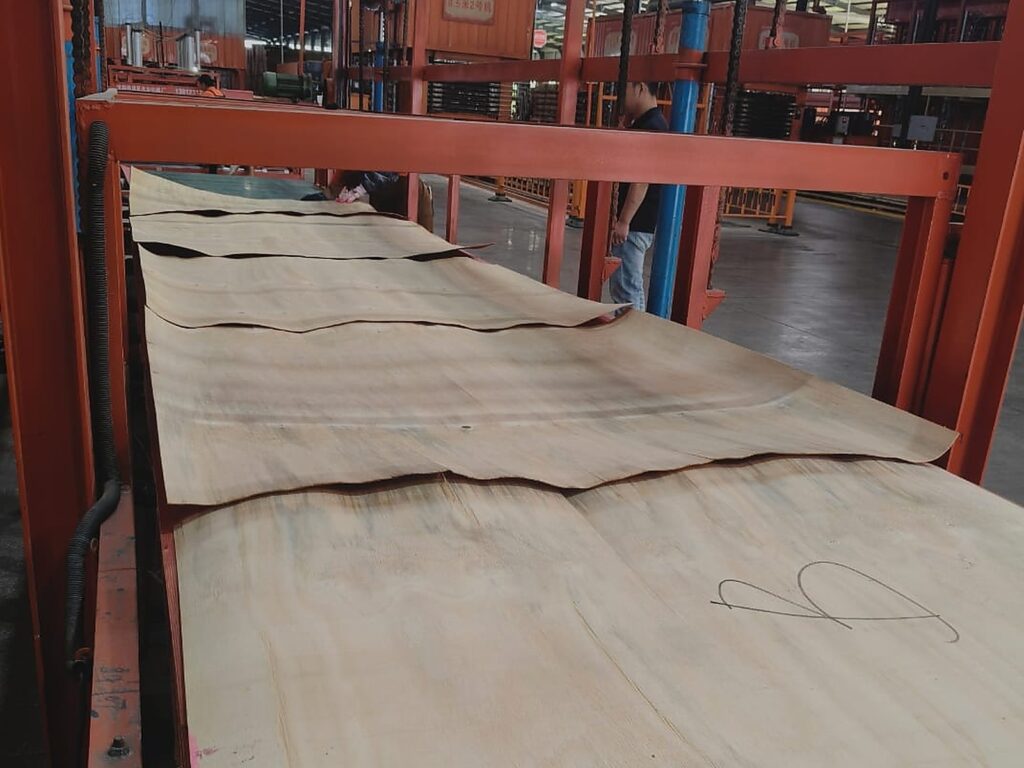
Australia uses between 350,000 and 400,000 cubic metres of LVL a year, Walker estimates, with most of it imported. He said the project represented an opportunity to turn a uniquely Queensland plantation resource into higher-value building products for the Australian construction market.
Timber-framed houses need LVL to hold “many of the critical openings, floors and structural elements together,” Walker said. As it stands, governments have agreed to build 1.2 million new well-located homes over five years from mid-2024 under the National Housing Accord.
It comes as Timber Queensland, the peak body representing the state’s forest and timber industry, welcomed the proposed investment in local timber processing and manufacturing. The peak body said projects such as Monkland showed “the opportunities that exist to create greater value from locally grown timber.”
“Projects that align with the Queensland Future Timber Plan, expanding value-added manufacturing will help support future housing demand,” said Clarissa Brandt, Acting CEO of Timber Queensland. She said such projects would also “strengthen regional economies and build a more resilient timber supply chain for the state.”
The Department of Primary Industries estimated Queensland’s hoop pine plantations at 44,000 hectares, which together grow 95 per cent of the world’s hoop pine. Their development dates back more than a century to the work of Norman Jolly, Queensland’s Director of Forests from 1911 to 1918, and his successor Edward Swain.
Walker said there was “a nice symmetry” in the timing, with Forestry Australia meeting in Canberra this week and its highest honour, the NW Jolly Medal, named for Jolly. He said that “more than a century after Jolly and Swain helped establish Queensland’s plantation forestry model, Corbets are looking at a new generation of manufacturing built around that resource.”
He said Monkland was “a nod to Jolly” in its own way, “taking a resource established with remarkable foresight and finding new value from it for another generation.” Subject to approvals, Corbets Group is targeting early site works at Monkland in 2027.
Author
The Daily Digest
Get Wood Central's top timber stories in your inbox every weekday
Join thousands of forestry, timber and building professionals who start their day with the Daily Digest. It's free, and you can unsubscribe at any time.