
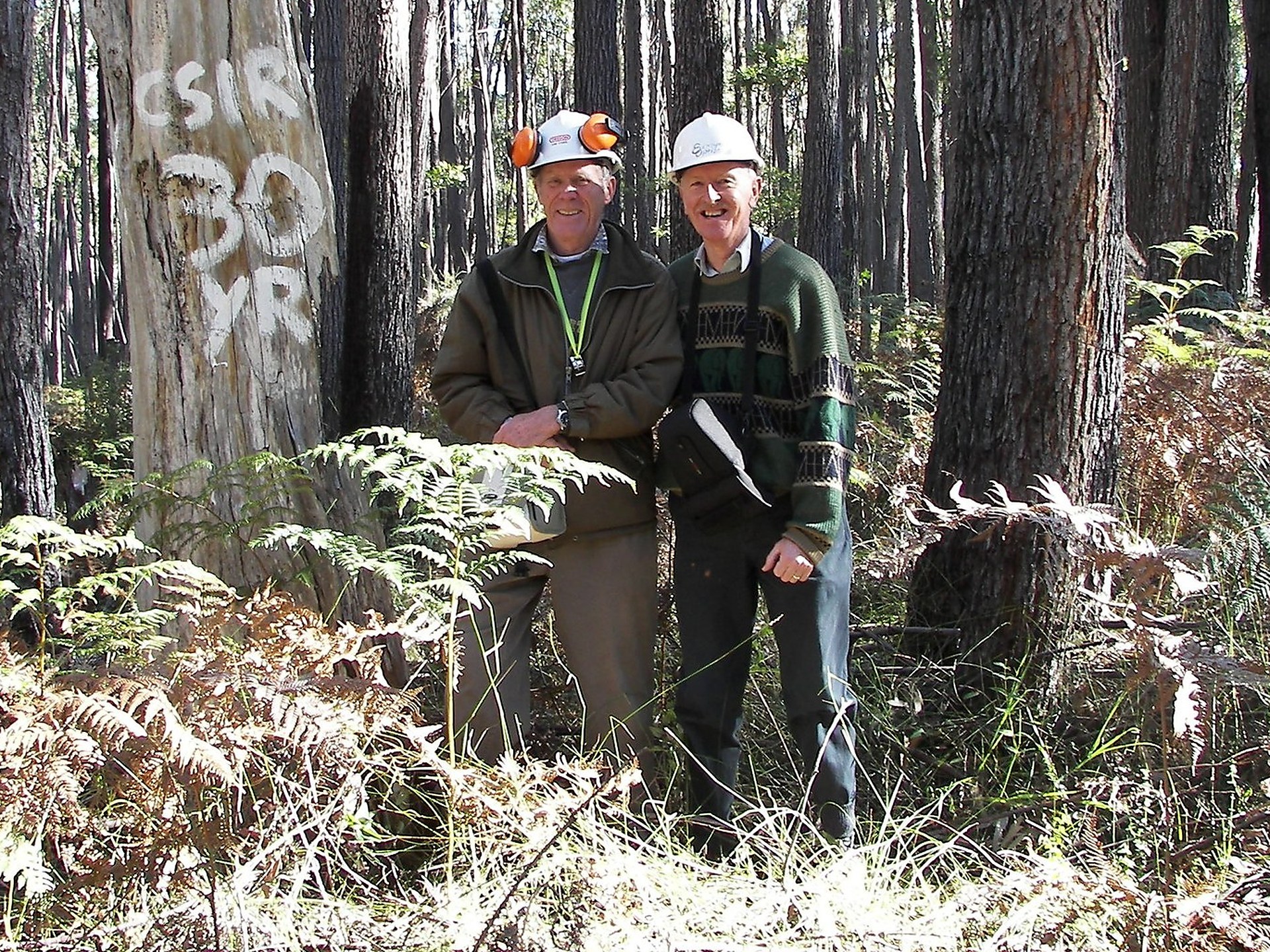
The carbon in every tree felled each year in Tasmania’s public native forests comes to less than a third of what the state’s energy sector emits, even if all of it went straight into the atmosphere. That is according to Dr John Raison, a former CSIRO chief research scientist, who told readers of The Mercury that the climate case against harvesting rests on a “discredited premise.”
“That’s not the signature of an industry driving net emissions, it’s the signature of a forest system that is effectively regenerating and sequestering carbon,” Raison wrote of the state’s native forests. He said those forests have soaked up carbon at much the same rate for decades, through years in which the timber cut from them fell steeply.
Tasmania’s government recorded energy sector emissions of 3.52 million tonnes in 2022, in an emissions report built on the same national inventory data Raison cites. Native forests harvested on private land drew down 6.06 million tonnes that year, whilst public multiple-use forests drew down a further 5.54 million tonnes.
Earlier this year, Wood Central published Raison’s warning that locking up Tasmania’s native forests would only shift timber demand onto imports. His latest piece returns to the carbon figures he first set out for Wood Central, and it is republished in full below with his permission.
Sustainable native forestry isn’t the carbon emissions villain that some claim, writes Dr John Raison
There’s a persistent claim doing the rounds in Tasmania: that harvesting our public native forests is pushing the state’s carbon ledger backwards. But that claim doesn’t hold up against the evidence.
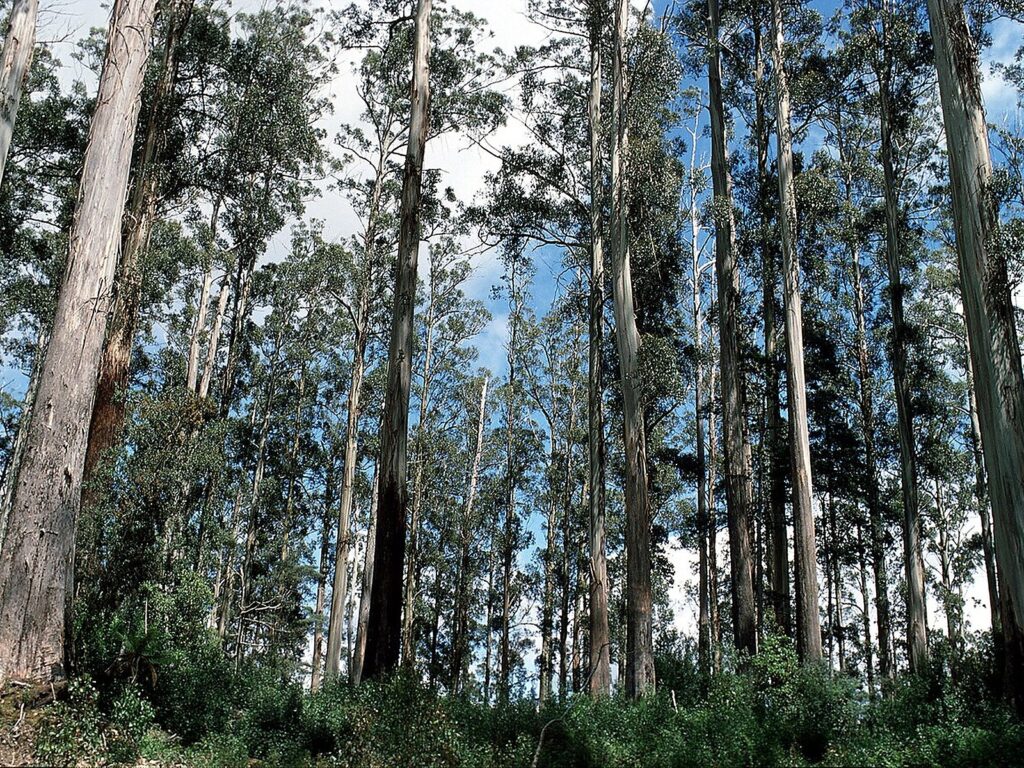
Start with scale and modern forest practices. Tasmania has 2.3 million hectares of public native forest and Sustainable Timber Tasmania manages 703,000 hectares, 460,000 hectares of which is suitable for wood production. Thus, only 13 per cent of public forests are used for wood production. Forest practices today are very different to decades past, with almost all harvesting confined to regrowth forests and a transition away from harvesting small areas of older forests.
Then look at the numbers. In 2022–23, Tasmania’s native forests produced roughly 935,000 cubic metres of log, with about three-quarters of that coming from public land. Each cubic metre of harvested wood contains roughly a tonne of carbon dioxide equivalent. Field measurements consistently show that around 70 per cent of felled biomass leaves the site as usable wood, well above the 30 to 40 per cent figure often cited by opponents of native forest harvesting, while the remainder stays in the forest to either naturally decompose or is burnt.
Run those numbers and the carbon in felled trees in public forest is roughly 1.05 million tonnes of carbon dioxide equivalent a year. Even under the unrealistic assumption that all of it is emitted outright, that’s less than a third of what Tasmania’s energy sector alone emits annually.
But that “worst case” emissions assumption is exactly what critics use, ignoring the full carbon benefits of wood use. A significant share of harvested wood carbon ends up in long-term storage, whether in buildings or landfill at end of life. Locally produced timber also substitutes for materials (steel, concrete, and aluminium) with far higher emissions footprints, and for imported wood products produced in countries with weaker environmental standards and higher carbon emissions than Australia’s. Once a proper lifecycle analysis accounts for these substitution effects, sustainably harvested native forestry doesn’t just avoid being a net emitter, but can outperform a no-harvest alternative on emissions grounds.
This isn’t a fringe interpretation. The National Inventory Report, built by the federal government using IPCC-approved accounting methods, tracks changes in forest carbon stocks and harvested wood product carbon pools (though it doesn’t count the substitution benefits above). Tasmania’s government, drawing on that data, found the state was carbon negative by 4.34 million tonnes of carbon dioxide equivalent in 2022, with harvested private native forests and harvested multiple-use state forests both acting as major carbon sinks, largely because carbon was locked up in regrowth following past wildfires and harvesting.
Carbon sequestration in Tasmania’s native forests has held remarkably steady for decades, even as harvest volumes have dropped sharply over the same period. That’s not the signature of an industry driving net emissions, it’s the signature of a forest system that is effectively regenerating and sequestering carbon.
None of this means forestry policy is beyond scrutiny, or that every harvesting decision is above criticism. Reasonable people can disagree about how much native forest should be available for production, or how conservative the buffer against uncertainty should be. But the claim that Tasmania’s native forest harvesting is a major net source of carbon emissions isn’t a matter of legitimate disagreement. It’s contradicted by solid information. Tasmanians deserve a debate about forestry policy grounded in that evidence, not one built on a discredited premise.
Dr John Raison
Former Chief Research Scientist, CSIRO
Related reading: Australia is the Odd One Out on Native Forest Carbon Credits · NSW Moves to Close 176,000 Hectares of Forest to Timber for Good · How Tasmania’s Forest Congress Is Bridging the Old Growth Divide
Author
The Daily Digest
Get Wood Central's top timber stories in your inbox every weekday
Join thousands of forestry, timber and building professionals who start their day with the Daily Digest. It's free, and you can unsubscribe at any time.